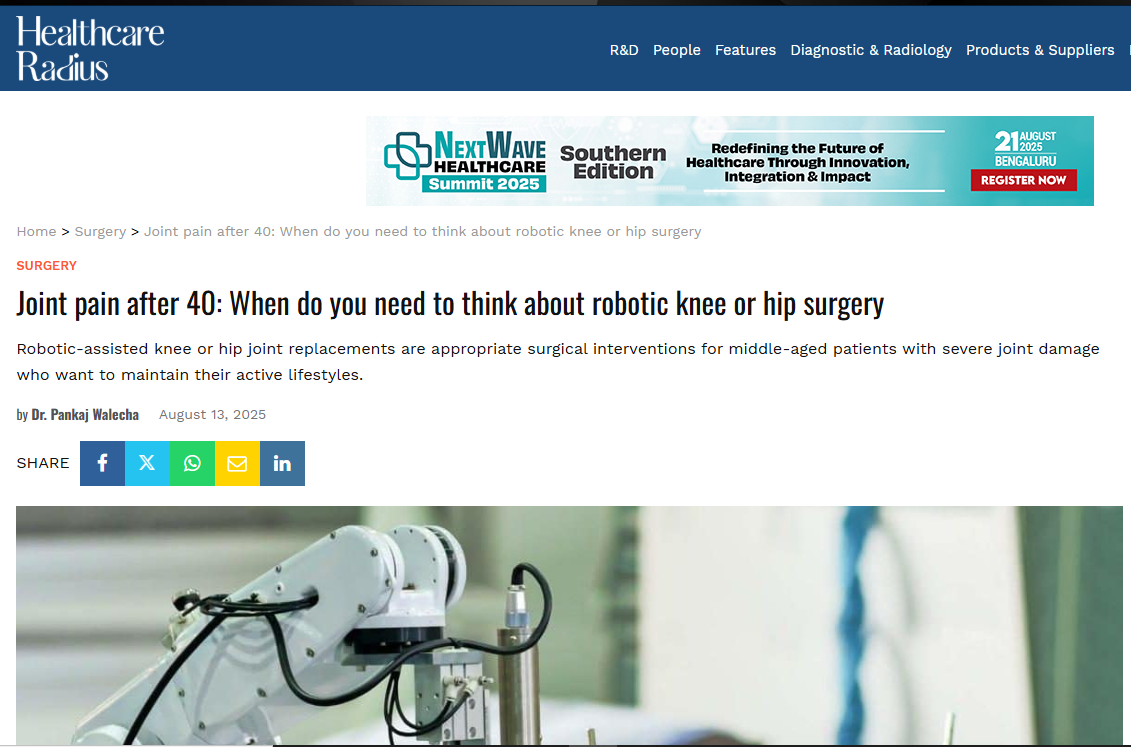
Robotic-Assisted Knee & Hip Joint Replacement
Joint pain, especially in the knees and hips, is a common concern as we age. While occasional discomfort after intense activity may be normal, persistent pain in your 40s or 50s could indicate an underlying condition such as osteoarthritis, cartilage degeneration, bone degeneration, or general wear-and-tear of the joints. Left untreated, these symptoms can progressively worsen, limiting mobility and quality of life.
Traditionally, joint replacement surgery was considered a last resort for older adults. However, advancements in surgical technology, particularly robotic-assisted techniques, have transformed the landscape. Today, patients in their 40s and 50s with severe joint damage can restore mobility, reduce pain, and maintain an active lifestyle with the help of robotic-assisted knee or hip replacement.
When to Consider Surgery
You may need to consult a surgeon if you experience:
-
Chronic joint pain lasting weeks or months
-
Difficulty performing daily activities such as walking, climbing stairs, or doing household chores
-
Stiffness after periods of rest
-
Joint locking or reduced mobility
-
Minimal or no relief from physiotherapy, medication, or lifestyle modifications
If non-surgical treatments do not provide adequate improvement, your surgeon may recommend joint replacement surgery.
Understanding Robotic-Assisted Joint Replacement
This advanced surgical approach uses robotic arms to assist the surgeon in achieving precise placement of the joint implant. A preoperative 3D CT scan is used to create a personalized surgical plan tailored to your anatomy. During the procedure, the robotic system ensures placement accuracy within a millimeter, helping preserve healthy tissue and ensuring optimal alignment of the implant.
Benefits of Robotic-Assisted Surgery
-
Greater Accuracy: Improved implant alignment and positioning
-
Less Pain & Faster Recovery: Minimally invasive technique reduces tissue trauma
-
Better Joint Function: Enhanced potential for natural movement post-surgery
-
Longer Implant Lifespan: Accurate placement contributes to durability
Is Robotic-Assisted Joint Replacement Right for You?
If you are a middle-aged patient with severe joint damage seeking to maintain an active lifestyle, robotic-assisted knee or hip replacement can offer significant advantages. Combining the expertise of an experienced surgeon with the precision of advanced robotic technology provides the best opportunity for long-term success and improved quality of life.